
3D Printing
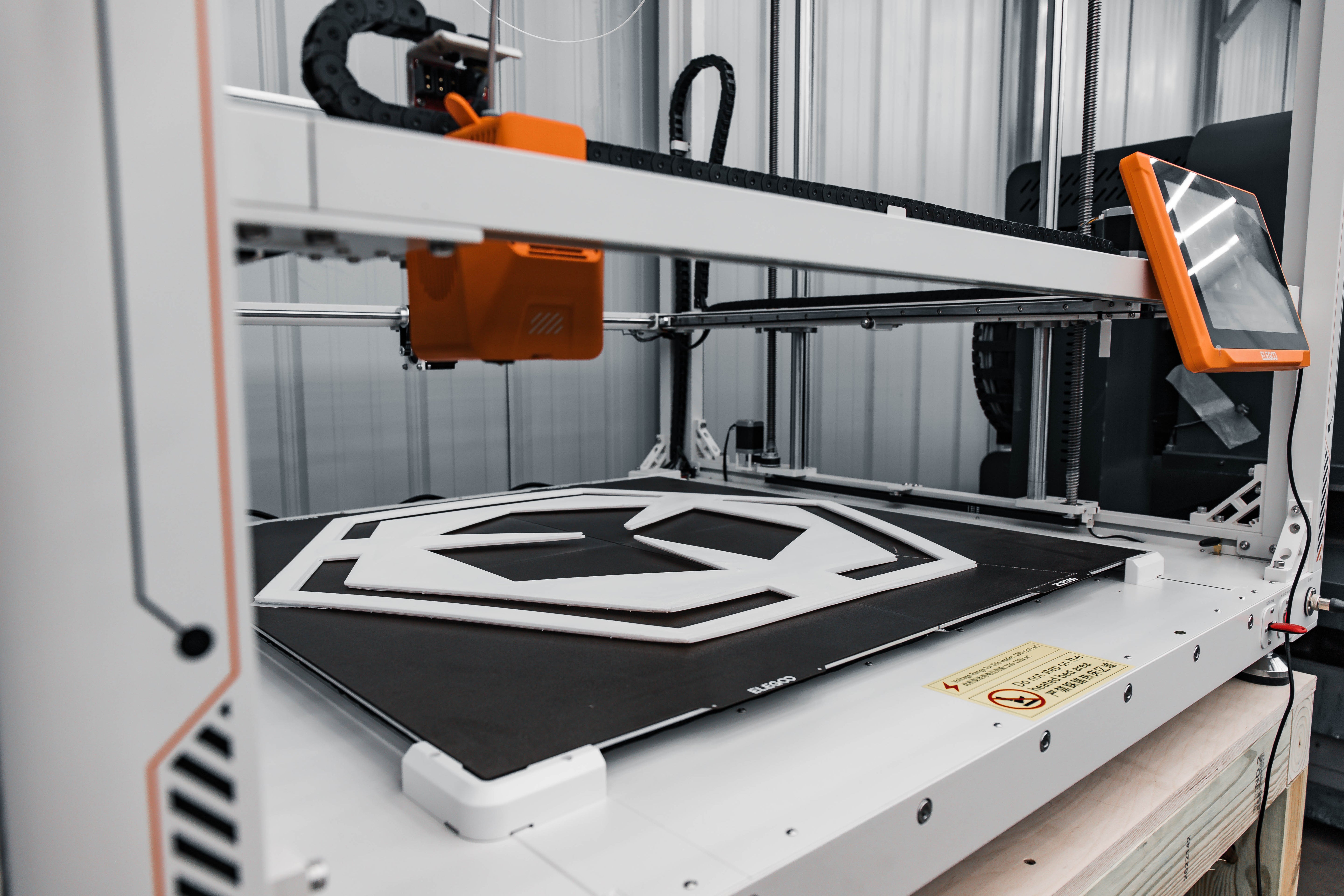
Complex Parts, Built Layer by Layer.
Our 3D Printing at Spark Robotic is built to support rapid development, functional prototyping, and low-volume production with speed and flexibility. With in-house Fused Deposition Modeling (FDM), Masked Stereolithography (MSLA), and Multi Jet Fusion (MJF) technologies, we produce parts that range from durable, functional components to high-detail prototypes. Each process is selected based on the specific requirements of the part, balancing strength, resolution, and surface finish to meet the demands of the application.
Our additive manufacturing approach focuses on part performance, design intent, and efficient iteration. This allows us to quickly validate concepts, reduce lead times, and produce complex geometries that are difficult or impractical with traditional methods. Whether supporting early-stage development or small-batch production, Spark delivers parts that are consistent, functional, and ready for the next stage.
3D Printing Services
Spark’s 3D Printing services are designed to support every stage of development, from rapid prototyping to low-volume production. With multiple printing technologies and material options available in-house, we can match the process to the performance, detail, and production requirements of each application. Our capabilities extend beyond printing, supporting design optimization, iterative development, and post-processing to ensure parts are functional, repeatable, and ready for use.

Fused Deposition Modeling (FDM)
- Durable thermoplastics
- Functional components
- Large format builds

Masked Stereolithography (MSLA)
- High detail resolution
- Smooth surface finish
- Fine feature accuracy

Multi Jet Fusion (MJF)
- Production grade parts
- Isotropic strength
- Complex geometries

Design & Prototyping
- Geometry optimization
- Iterative prototype validation
- Post-processing & finishing
From Concept to Production
Additive manufacturing at Spark is driven by application requirements, material performance, and production intent. Each project is evaluated based on strength, detail resolution, geometry, and end-use conditions to determine the right process and material combination. By integrating engineering with our printing capabilities, we ensure parts are optimized for functionality, repeatability, and efficient production from the start.
Process-Specific Printing
The right process is selected for strength, detail, and intent.
Design Optimization
Parts optimized for print orientation, support reduction, and repeatability.
Rapid Iteration Cycles
Fast design validation accelerates development timelines.
Complex Geometry Capabilities
Additive manufacturing creates features traditional methods can’t.
Production Workflows
Scalable processes support prototypes and small-batch production.
Integrated Engineering
Cross-department collaboration improves function and reduces rework.
Start your project.
Have an idea? Let’s build it.
Get a quote and start your project today.